
Parent-child attachment, making the most of your precious time, and when to seek help
© myECE.org.nz.
Parent Support and Information.
Understanding the importance of parent-child attachment and the issue
“Will my child still love me?” “Will my child become more attached to the career or teacher?”
Parent–child attachment can be harder to maintain and nurture when a child spends long hours in childcare. Infants and young children naturally seek emotional security, and strong attachment develops when a parent is present, responsive, and sensitive to their child’s needs. But, in today’s busy world, this can be challenging – families often spend long stretches apart, and the time they do have together can feel rushed.
At the same time, young children benefit from variety, new environments, and friendships. Just like adults, they need stimulation and independence, and without a break both parent and child can end up feeling overwhelmed. That’s where playgroups, playcentres, kindergartens, and other childcare settings can play a positive role.
A secure parent–child attachment is the foundation for a child’s independence and resilience.
People often say that the quality of time matters more than the amount of time, but both are important. Children need enough time with their parent for the relationship to be reciprocal – time to enjoy each other, learn from each other, and build a deep, lasting bond.
Partnering up with the childcare service
Choose your work and childcare arrangements to minimise stress and a hectic schedule. Consider:
- Work flexibility if or when your child gets hurt or falls sick (sickness may last for days/weeks)
- Having a less busy or stressful workload to have energy for your child later.
- Making sacrifices for your child, not sacrificing your child.
Use the checklist for finding the best childcare service for your child (and you). Try not to change childcare arrangements and carers too frequently.
Communicate well with the early childhood service – the teachers / carers will have insights to your child’s interests, personality and developmental milestones.
Tell the childcare you want to be informed truthfully how your child is coping. Insist on honest feedback on how your child is settling and coping (even high-quality childcare services may not want to burden or worry you even if they see your child isn’t settling well – read: telling parents only what we think they want to hear about their child).
Visit during the day (and to maintain breastfeeding if you are). This could be spontaneous but if done too often at different times with no pattern it could be unsettling for your child.
Let your child nap at the childcare if needed because this gives your child a break and it enables you to spend more time in the evening with your child who is less tired after a sleep at childcare.
Tips for making the most of precious time
Be sensitive to your child’s needs… don’t belittle their problems. Lots of hugs, cuddles, and kisses are usually what a child needs most.
Lighten up and don’t sweat the small things, e.g.
- Puree and sneak the veges into their pasta then get on and just enjoy dinner together
- So, what if they don’t eat it all?
- Don’t have a cry over spilt milk or wet and dirty clothes.
- Let them stay up a bit later with you.
It’s difficult to do but try not to always show your feelings of stress and fatigue as your child has likely had an equally or even more testing day. If you show your anger and frustration, they will feel it too.
For each time you speak forcefully or discipline there should be at least 7 other moments of praise, encouragement, laughter, fun, playfulness, hugs and cuddles, reading, conversation and so on. Make time together fun and loving.
Learn to de-stress and relax with your child instead of relying on after they go to bed, e.g.:
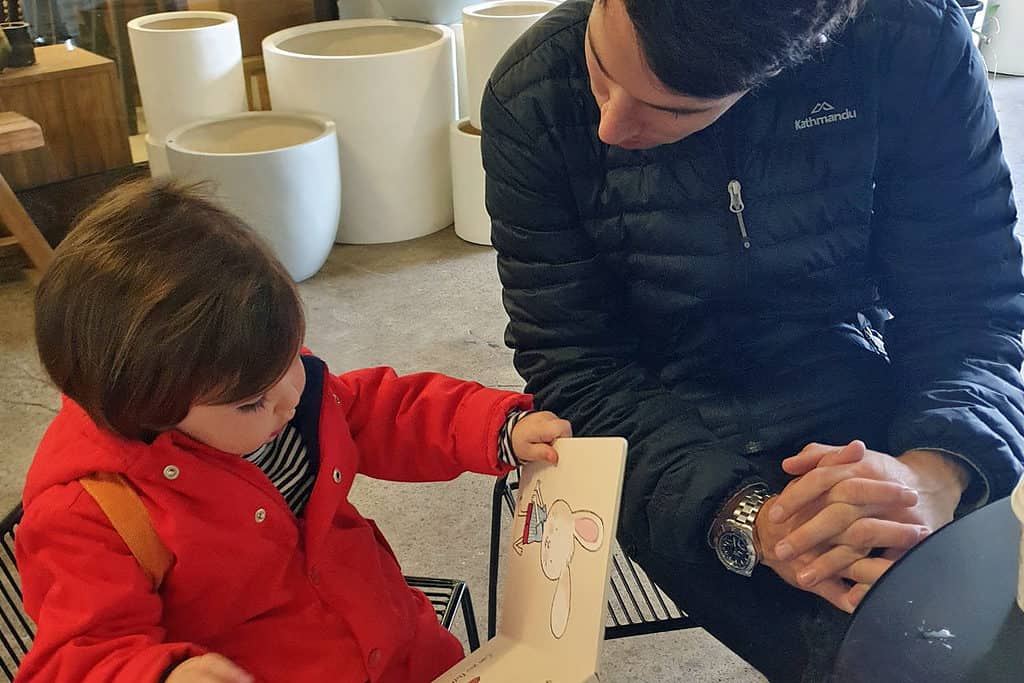
- Go shopping together, perhaps to a garden centre, a cafe, or train station to watch the trains come and go.
- Relax on the couch together cuddling and chatting while watching TV or even wrestling (your child might wrestle your arm (pretending it is a dinosaur) while you just relax watching the news)
- See if you can both do some house chores together, cook, clean, hang out washing, vacuum, etc. but without rush or a perfect finish. If the child gets distracted and wanders off that is fine.
- Have a bath together, eat dinner together, a cup of tea (milo) together.
- Exercise at the park together with a soccer ball
- Make a train track, puzzle and other play and tidy up together
- Water the garden, plant sunflowers, eat the strawberries, play with water, dig, carry stones, etc.
Just ‘be’ with your child without rushing. Your mere presence puts your child at ease so they might just like to play on their own.
Don’t interrupt your child playing… let them continue, delay dinner, make a cuppa, enjoy watching them, carry on cleaning. You don’t even need to comment. It probably won’t last very long so dinner won’t get too cold, anyway that is what microwaves are for. Immerse ‘quality’ time into the morning and evening rush. For example:
- While dressing your child kiss and cuddle, sing, joke, laugh, tickle, play, make it fun.
- Run, hop, kangaroo jump to the car.
Other tips for babies include breast feeding, carrying infant in sling facing parent for long periods, massage, smiling, eye contact, singing, chatting, sleeping nearby, skin on skin touching.
Upskill your parenting through books, courses and the early childhood service, the same as you would for your job. It will help you enjoy your child more, for example learning about setting boundaries, consequences, extending their learning, praise, encouragement, role modelling, giving choices, suggesting rather than ordering, and so on. We all make mistakes, and we learn from our mistakes by thinking about and finding out how we could have done better.
Indicators of a possible parent-child attachment problem
Should your child show signs of a possible attachment problem, re-evaluate your childcare arrangements and the quantity and quality of time you have to spend with your child and consider if you need to make any changes to strengthen the parent-child attachment.
Talk with your local GP or Plunket nurse – talking with a professional can be reassuring (e.g., there could be another underlying issue e.g., such as your child being bullied at childcare) and if needed the professional can help with referrals or resources.
For infants, signs of attachment disorders are said to be:
- No stranger anxiety or doesn’t notice or care if left alone by parent or caregiver
- Constant crying or weak crying response
- Flinching/ startling
- Not clinging or holding on / stiff / resistant to cuddles
- Weak sucking response
- Lack of eye contact and tracking skills
- No reciprocal smile
- Developmental delays
- Self-abusive behaviour such as head banging
For pre-schoolers signs of attachment disorders are said to be:
- Superficially engaging or charming
- Affectionate with strangers indiscriminately
- Disobedient, defiant, argumentative (to keep in control)
- Destructive to self, others and objects
- Cruel to animals
- Steals, lies about obvious things
- Lacks impulse control and frequently hyperactive
- Developmental delays
- Often angry and frustrated
- Lacks empathy and cause/effect thinking.
- Not eating or eating too much
- Poor peer relationships
- Nonsense chattering and questioning
- Demanding or too clingy
- Plays adults against each other
- Lies about being abused
- Feels entitled
You may also be interested in reading
Leaving your child for the first time – tips to help the separation
Settling-in and how to tell if your child is at happy at the service