Curriculum Provided to Children

The early childhood service’s curriculum must be consistent with Te Whāriki as it is the prescribed curriculum. View full details here on the practices required, support to be provided to children, and how adults must teach.
Share Me

© myECE.org.nz. 
 Parent Support and Information. 

The early childhood service’s curriculum must be consistent with Te Whāriki as it is the prescribed curriculum. This includes: 

  • The holistic way children learn and grow.
  • What is important to children, families, staff, and the community.
  • Empowering and respecting children as competent learners (as opposed to slow, dumb, or early learners).
  • Developing reciprocal and responsive relationships.

All services should have a curriculum policy, that is known by staff and families, and reviewed as needed.  See Curriculum Policy – Teaching and Learning, Assessment, Planning and Evaluation

Individualised and dynamic curriculum practices 

The curriculum must be informed by assessment, planning, and evaluation that shows understanding of children’s learning, interests, family and life contexts. 

te whariki new 2017

Curriculum support of children’s learning

The curriculum must support children’s learning and development by:

  • Being inclusive and responsive to children as confident and competent learners.
  • Respecting children’s preferences and involving them in decisions about learning experiences.
  • Providing a language-rich environment (e.g., art, drama, math, print, and music, etc).
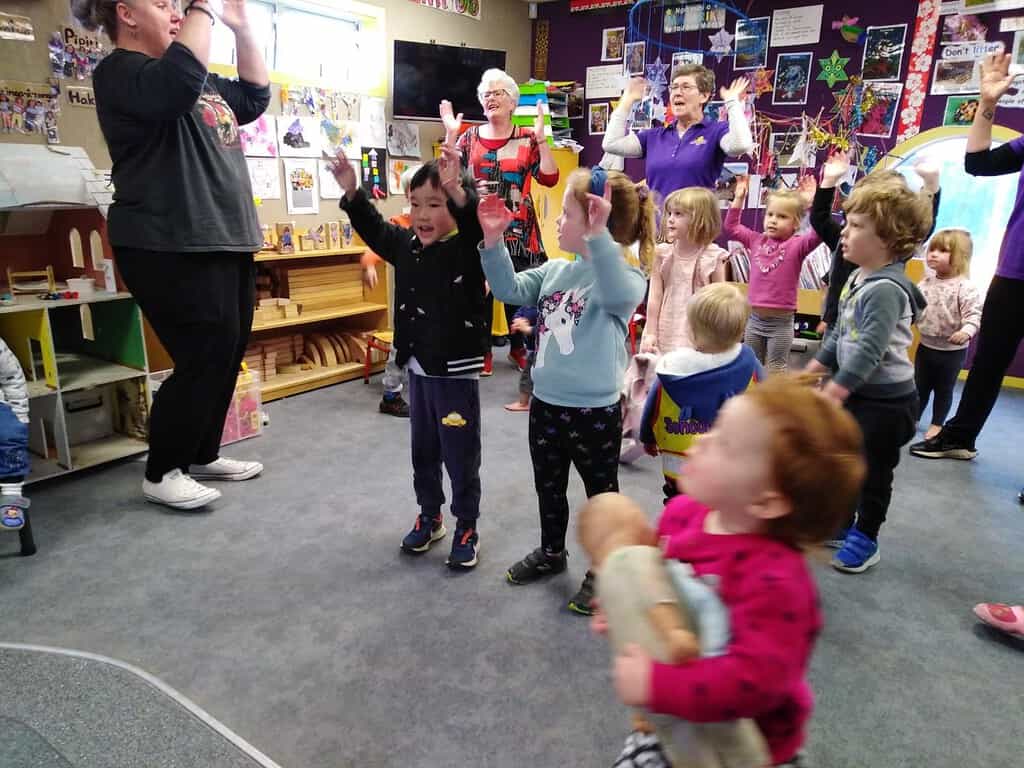
  • Providing a range of opportunities and experiences to extend learning and development both indoors and outdoors, individually and in groups.

Teaching

The adults must:

  • Interact meaningfully, building positive and mutual relationships that enhance children’s learning.
  • Demonstrate their knowledge and understanding of practices and theories of child learning and development.
  • Respect and acknowledge parent and family and whānau aspirations for their child.

Failing to meet minimum standards

The Ministry of Education needs to know:

  • If you are concerned children’s needs are not being met.
  • If you are concerned a service is not meeting a minimum legal requirement.

READ MORE: How to make a complaint and your options.


CAUTION: This page and the information here is provided as part of the My ECE Guide to Early Childhood Service Regulations and Licensing Criteria for Parents  (The Guide).  The Guide does not purport to be a full and accurate interpretation of all statutory provisions relating to early childhood education services. While best efforts have been used in preparing this guide, no representations or warranties of any kind are made and My ECE assumes no liabilities of any kind with respect to the accuracy or completeness of the content. Please note that the Government and Ministry of Education may change, update, or alter any of the requirements at any time.  Please help to keep the information on this page up to date by letting us know of changes that need to be made.
Thank you!  Kia pai te rā

Reference:
My ECE Guide to Early Childhood Service Regulations and Licensing Criteria for Parents. Prepared by Dr Sarah Alexander and Warwick Marshall.

More
articles

Parent information display on an early childhood centre wall (NZ)
Our Advocacy

Harder to Speak Up, Harder to Check: The End to Rules Requiring Display of a Complaints Procedure, Key Regulations, and Teacher Name and Qualification Info

The rules that once required centres to display key information – such as the names and qualifications of teachers, the regulations they must follow, and how to make a complaint (including concerns about breaches of regulation) – have been stripped back. What used to be visible at a glance will now sit behind layers of “ask us if you want it.”

Read More »
My ECE My Early Childhood Education
Making a Complaint, Raising Concerns, or Reporting a Serious Incident

Parent Complaint Form

Parent Complaint Form – For Raising Concerns at Your Child’s ECE Service Every licensed services, including early childhood centres and homebased ECE, must have an

Read More »
child complaint form
Making a Complaint, Raising Concerns, or Reporting a Serious Incident

Child Complaint Form

Child Complaint Form Support your child to make a complaint, using this child complaint form, and have their needs and wishes heard. This form is

Read More »
Infant with book
Our Advocacy

Submission to the Education and Workforce Committee on the Education and Training (Early Childhood Education Reform) Amendment Bill

ECE Parents’ Council Aotearoa represents parents and caregivers across Aotearoa New Zealand who are committed to high-quality, accessible, and safe early childhood education (ECE) for our tamariki. 

We oppose the Education and Training (Early Childhood Education Reform) Amendment Bill in its entirety and respectfully submit that it should not proceed.

Read More »
breach of trust crying sad child
Our Advocacy

Horrifying injuries, harmful sexualised behaviour and teachers talking about rape in front of children: What complaints about ECE services tell us about the state of the sector

A child escaping from a centre by digging under the fence, multiple instances of toddlers breaking bones twice in a matter of months, and allegations of inappropriate handling of a child’s sexualised behaviour are among complaints about ECE services made through MyECE, the website for the ECE Parents’ Council.

Read More »
Regulations, Rules, and ECE Service Legal Requirements

Licences and Licensing

What a licence is, the classes of licence, details shown on the licence which must be displayed, and the requirement for the licence holder to be a fit and proper person.

Here’s a full outline on what you need to know about licences.

Read More »
Family and parent involvement in their child's learning and early childhood education
Regulations, Rules, and ECE Service Legal Requirements

Who Can Be Authorised to Collect a Child or Do Pick-Up

Can an older sibling pick up their little brother or sister from the centre or service?
There are some specific rules on who can be authorised to do pick-up, under what circumstances, and the person’s age.
Here’s the full details on the rules.

Read More »
Early Childhood Education and Daycare - Reviews, Rating, and a description of the service's standards

Join the Parents Council

Are you are parent, grandparent, or caregiver of a child under 6 years?    

Join the ECE Parents Council.   You will receive:

  • A monthly newsletter (free)
  • Survey invitations and notifications of important changes in ECE

We promise not to spam you with rubbish, just useful information.